ABOUT
I've been building things since I was 14.
It started with small PvP games in the school computer lab. My friends would suggest characters, I'd make them, and they'd use them as their avatars when we fought. It was just a small thing we did. From there I moved on to modding GTA San Andreas, changing the gameplay, the maps and how things behaved.
At some point I decided to learn it properly. Java came first, for small Android apps, then Python for scripting. Android got me into Linux, since that's what's underneath, and Linux got me into rooting phones and seeing how far I could push them. That's also where C++ came in, first for working with binaries and later for competitive programming.
The biggest thing I built in that phase was an anti-theft app for Android. It took a screenshot every 30 seconds and stored it on the phone and in your Google Drive, and on every reboot it fetched and ran a script you'd set up in advance: get the location, lock the device, remove a password, whatever you needed. The original idea was actually simpler. If you saw something on your phone and forgot where, you could search your screenshots in Drive and find it.
Engineering, then software
I did my bachelor's in mechanical engineering at the University of Benin. I already liked programming and figured an engineering degree would teach me things I wouldn't pick up on my own. My final-year project was a hybrid go-kart with an engine and an electric motor. I enjoy physical engineering, but I like software more, because you can go from an idea to something people use much faster.
Competitive programming filled the gaps: Code Jam, Hash Code, Hacker Cup, and TON smart-contract contests. I regularly placed near the top in Nigeria. Mostly I just liked how the problems made me think, and I'd sometimes spend longer on one than I should have.
Bank of America, and a Raspberry Pi
In 2019 I had internship offers from Goldman Sachs and Bank of America, and picked Bank of America because they could offer six months in Dublin instead of a summer. It was my first time on a big team, and I learned a lot about reporting on my work and asking good questions. I helped with the move from Python 2 to 3 before Python 2's end of life and built a dashboard for viewing trades from different booking systems. The team was in London and India.
Around the same time my university asked me to look at how they managed student results. It was an MS Access database. I proposed something better and built it with two other students: registration, results, GPA, and the result sheets that get printed and pinned up each semester. It's sensitive work, because a GPA decides whether someone graduates. The school wanted it on their premises, so it first ran on a Raspberry Pi on campus, which got tricky once I was travelling. The other two moved on, I kept going, and today it runs in the cloud for a few cents per department a month, with the frontend on a free tier, so the only real bill is the domain. Five departments still use it, and I'm still shipping updates.
Master's, and OneRagtime
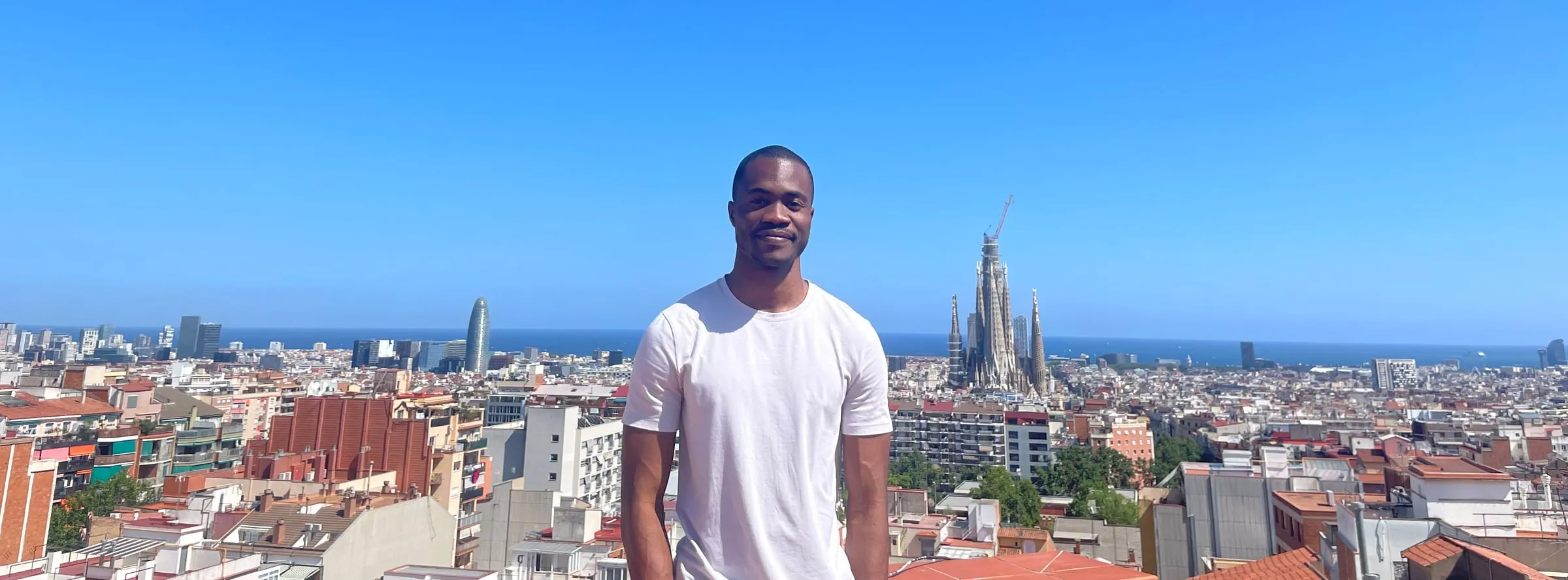
For my master's at Harbour.Space in Barcelona I picked front-end engineering because it was the side I knew least. I'd always built backends and simple UIs. The degree showed me how much goes into a good interface: frameworks, performance, WebAssembly, canvas, web workers. My capstone was CloudStation3. I'd moved to Barcelona and couldn't bring my PlayStation, so I built a way to play my games from any device.
During the master's I started a one-year internship at OneRagtime, a VC platform, in April 2023. I'd already been building things for years, so I could deliver more than they expected from an intern, and they offered me a full-time role. I've kept trying ideas there: JSDoc types as a stopgap so the frontend and backend agreed on their contracts without asking the whole team to switch tools, an LLM tool that pulls the important parts out of startup pitch decks, AI-drafted quarterly reports, and then the rewrite of the whole platform. When I joined there were six engineers and a designer. People left one at a time, and by mid-2025 we were two, with me owning the architecture and technical decisions.
Now
I'm still learning how far I can push AI tools in my own work. I build with coding agents every day, and on the side I'm building ThinClaw, an AI assistant with its own computer that runs a lot of my day-to-day. I'm looking for a senior backend or full-stack role. If that's what you're hiring for, say hi.